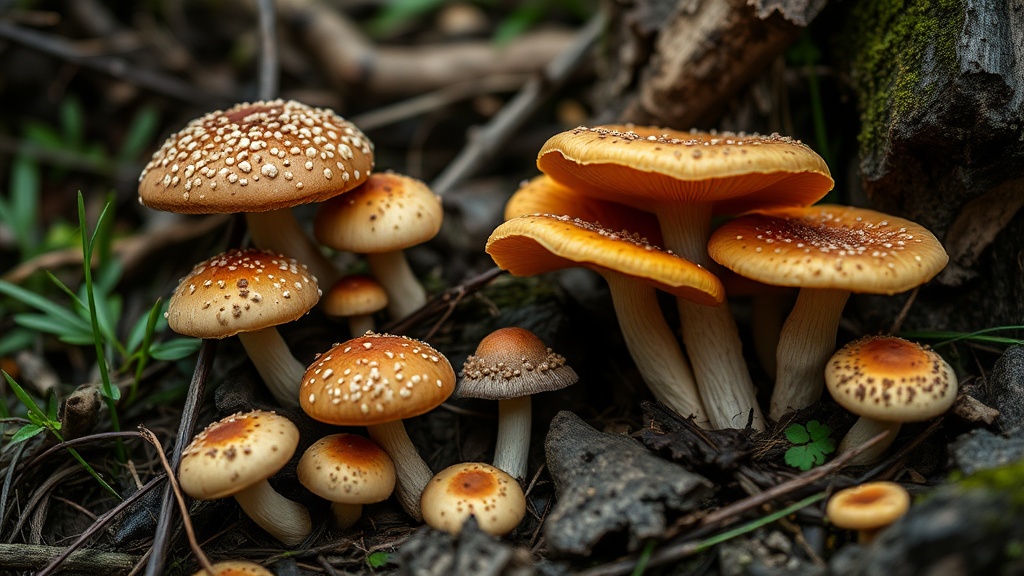
Picking the Best Wild Mushrooms in the Comox Valley

Most people believe that foraging for mushrooms in the Comox Valley requires a degree in mycology or a lifetime of experience in the woods. That's a mistake. While you definitely need a high level of caution, much of successful foraging in the Comox Valley comes down to knowing the specific microclimates of Vancouver Island and recognizing a handful of key species. This guide covers the identification basics, the local seasonal timing, and the safety protocols you need to follow to avoid a trip to Comelico Emergency.
The Comox Valley is a goldmine for fungi, but it's also a place where mistakes can be fatal. We're talking about the difference between a delicious meal and a medical emergency. You'll find incredible varieties from the damp forests of Mount Washington down to the coastal lowlands, but you have to know what you're looking at.
What Are the Best Wild Mushrooms to Find in the Comox Valley?
The best wild mushrooms to find in our region are primarily Chanterelles, Porcini, and Morels, depending on the exact month. These species thrive in the temperate rainforest conditions we enjoy here in British Columbia. If you know where to look, you can find high-quality edible fungi that rival anything you'd buy at a high-end grocery store.
Chanterelles are the heavy hitters around here. They have a distinct apricot-like scent and a wavy, rather than gill-like, underside. They love the mossy, old-growth vibes you find in the higher elevations near Cumberland. If you find a patch of these, you've hit the jackpot.
Then there are the Morels. These are the "holy grail" for many local foragers. They usually pop up in the spring, often following a period of heavy rain and a temperature spike. They have a honeycomb-like texture and are incredibly easy to identify once you see a few. They're a favorite for anyone who enjoys finding fresh seasonal produce at the Comox Valley Farmers Market because the flavor profile is so unique.
Don't forget the Porcini (often called King Boletes in Europe). They are chunky, meaty, and much more substantial than the delicate Chanterelle. They tend to prefer the coniferous forests found in the foothills of the Strathcona area. A single well-identified Porcini can make a world-class risotto.
| Mushroom Type | Typical Season | Key Feature | Difficulty to Identify |
|---|---|---|---|
| Morels | Spring (April/May) | Honeycomb cap | Easy |
| Chanterelles | Late Summer/Fall | Apricot scent & wavy ridges | Moderate |
| Porcini | Late Summer/Fall | Thick stem & bulbous base | Moderate |
| Oyster Mushrooms | Year-round (Wet periods) | Growing on wood/trees | Easy |
How Do I Identify Edible Mushrooms Safely?
To identify mushrooms safely, you must use multiple physical characteristics—such as spore print color, gill structure, and smell—rather than relying on a single visual cue. Never eat a mushroom unless you are 100% certain of its identity. A "maybe" is a "no."
First, get a high-quality field guide. I recommend the Wikipedia entry on specific species as a starting point for research, but a physical book is better for the field. You need to look at the underside. Does it have true gills (thin blades), or is it a ridge? Does it have a stem that is hollow or solid? These tiny details matter.
The spore print is a non-negotiable step. If you find a mushroom that looks like a Chanterelle, you should still perform a spore print. Place the cap on a piece of paper and wait. The color of the spores can be the one thing that distinguishes an edible mushroom from a toxic lookalike.
It’s also worth noting that "rules of thumb" are often wrong. You might hear people say, "If an animal eats it, it's safe." That is dangerous nonsense. Squirrels can eat things that would send a human to the hospital. Don't trust the wildlife; trust your research and your field guides.
The Essential Forager's Toolkit
You shouldn't just wander into the woods with a grocery bag. To do this right, you need a few specific items:
- A Mesh Bag: This allows spores to drop as you walk, helping the next generation of mushrooms grow.
- A Small Knife: For cleanly cutting the mushroom at the base rather than pulling it (this protects the mycelium).
- A Brush: To clean dirt off before you even get home.
- A Field Guide: A physical book or a highly reliable app.
Where Can I Go Foraging Near Courtenay?
Foraging locations are often kept secret by locals, but generally, you'll find success in the damp, shaded areas of the Comox Valley foothills and the outskirts of Cumberland. While you can't just forage anywhere, knowing the general terrain is the first step.
The areas around Mount Washington are fantastic for late-season mushrooms. The elevation changes create different microclimates that allow for a longer season. However, be mindful of land boundaries. You shouldn't be foraging in protected provincial parks or private property without permission. Most of the "legal" foraging happens on Crown land, but always check the current British Columbia land use regulations before you head out.
If you're looking for Oyster mushrooms, look for decaying hardwood trees. These are often found in the lower, wetter valleys. They are much easier to spot than the more elusive Chanterelles. They grow in clusters, often looking like shelves on the side of a fallen log.
One thing to watch out for: the "lookalikes." For instance, the Western Agaricus species can look a lot like certain edible mushrooms, but they can cause significant gastric distress. This is why I emphasize the spore print. If you aren't sure, leave it alone. It's better to go home hungry than to spend the night in an ER waiting room.
The Comox Valley is a beautiful place to explore. Whether you're out hiking or looking for the perfect mushroom for a dinner party, respect the forest. Take only what you need, and leave the rest for the next person (and the next season).
If you're new to this, start small. Find one species, master it, and then move to the next. The learning curve is steep, but the reward—a basket of fresh, wild food—is unlike anything you'll find in a supermarket. It's a way to truly connect with the landscape of the Comox Valley.
Steps
- 1
Study Local Species
- 2
Gather the Right Tools
- 3
Identify with Certainty
- 4
Harvest Responsibly